
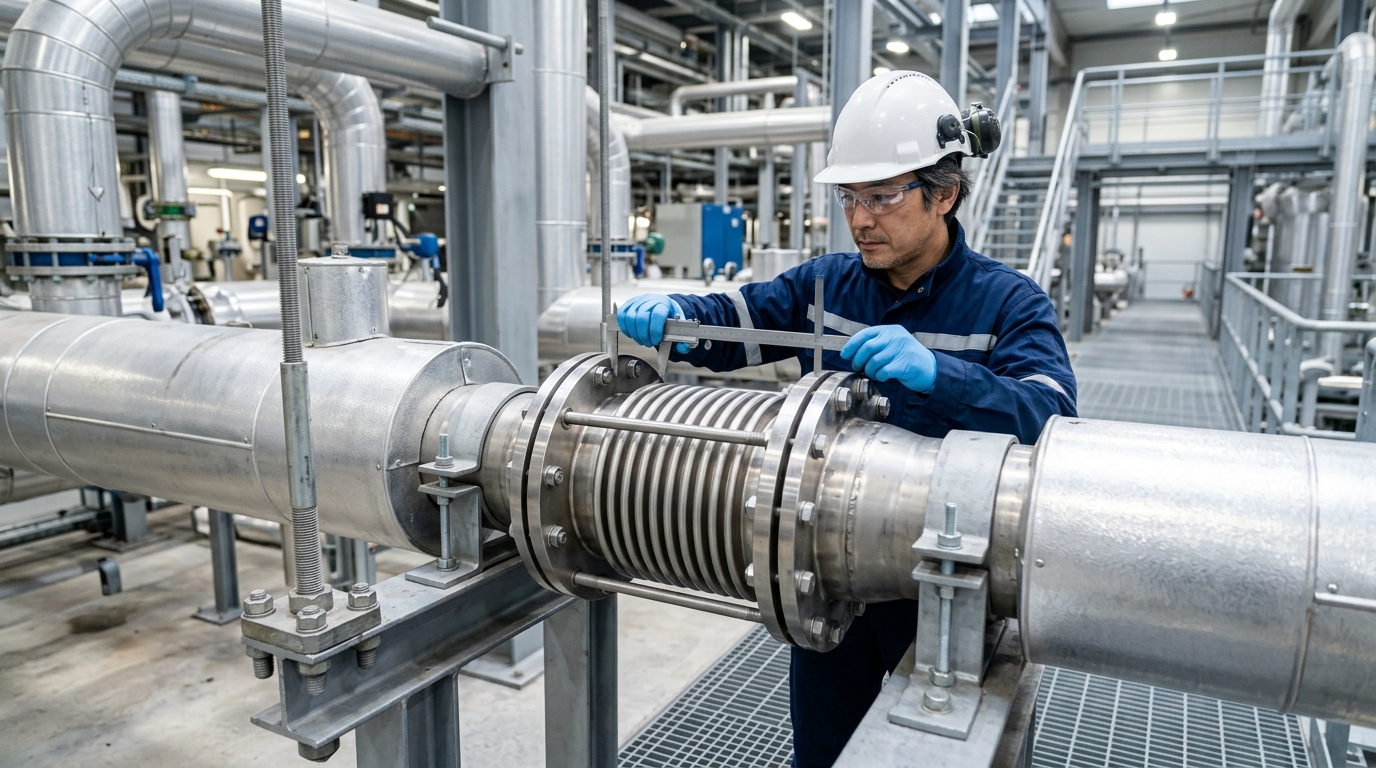
To prevent the “flow meter won’t measure correctly” problem with high-temperature, high-pressure, or high-viscosity fluids, the starting point is to first organize the fluid’s temperature, pressure, viscosity, and cleanliness, and then select a measurement method that operates stably under those conditions. General-purpose impeller (paddle-wheel) types and certain methods with moving parts are prone to errors or failures under such severe conditions, so judging the fundamental suitability of the method itself has a major influence on accuracy. Here, we organize the points where selection tends to go wrong, along with how to think about them by condition.
Key points of this article
- For high temperature, high pressure, and high viscosity, narrow down the method by “suitability”—whether it will operate without breaking under those conditions—before considering “accuracy.”
- Because each measurement principle is affected differently when viscosity changes, grasp both the minimum-to-maximum flow rate and the viscosity range.
- Catalog values are guidelines under reference conditions. Confirm everything including corrections at the actual temperature and pressure, as well as the installation conditions.
Why “unable to measure” occurs under severe conditions
Each flow meter measurement principle has its strengths and weaknesses, and using a method designed with room-temperature, low-viscosity water as its baseline directly for high temperature/high pressure or high viscosity can lead to unexpected errors or premature wear. First, let us consider separately how each condition affects measurement.
How high temperature and high pressure affect measurement
At high temperatures, problems tend to arise such as seal materials or sensor components degrading beyond their heat-resistance limits, or the fluid density changing so that the relationship between volumetric flow rate and mass flow rate shifts. At high pressures, if the pressure-resistance strength or the specifications of the connections are insufficient, the risk of leakage or damage increases. In general, it is recommended to select with a margin between the operating temperature/pressure and the maximum rating in the catalog. It is important not to overlook peak temperatures and pressures in actual operation (including at startup or during abnormal conditions).
How high viscosity affects measurement
With highly viscous fluids, moving parts such as impellers or turbines tend to turn less easily, and indication tends to be hard to obtain in the low-flow range. With differential-pressure types, pressure loss tends to become large, and with ultrasonic types, bubbles or high viscosity can cause attenuation that makes measurement difficult. On the other hand, methods that are less dependent on the fluid’s physical properties, or methods with no moving parts, can work to your advantage, and suitability changes depending on the combination of viscosity and flow-rate range.
How to think about selection by condition
Rather than deciding by a “single value” alone, the practical approach is to line up the fluid conditions, flow-rate range, and installation environment, and narrow down starting from the requirements you cannot compromise on.
First, narrow down by the non-negotiable requirements
The first things to confirm are the fluid name (composition), maximum/normal operating temperature, maximum/normal operating pressure, viscosity (including changes with temperature), and cleanliness (presence of slurry or bubbles). These almost entirely determine whether a method is viable. Next, line up the range from minimum to maximum flow rate, the required accuracy, and the allowable pressure loss. In particular, with high viscosity, measurement tends to become impossible on the minimum-flow side, so grasping not only the maximum flow rate but also the minimum flow rate is important.
Installation conditions and how to handle readings
Even with the same method, accuracy changes with the upstream/downstream straight-pipe lengths, the mounting orientation, and the presence of pulsation. Catalog accuracy is a guideline under reference conditions, and at the actual temperature, pressure, and viscosity, correction or condition confirmation may be required. Treating figures as “in general” and “depending on conditions,” and taking the stance of cross-checking against the specifications wherever you are unsure, prevents rework.
Frequently asked questions
Q1. Which method is suitable for high-temperature fluids?
A1. The prerequisite is that the operating temperature stays within the heat-resistance range of the sensor and seal materials. Taking the effect of density changes into account, select with a margin against the temperature rating. Confirming the peak temperature is essential.
Q2. I cannot measure low flow rates with a high-viscosity fluid.
A2. Methods with moving parts tend to have difficulty producing indication in the low-flow range. A method that is less affected by viscosity, or a review of the measurement range, may be effective. Grasping the minimum flow rate is the first step.
Q3. Why can’t I measure as accurately as the catalog states?
A3. Accuracy is a guideline under reference conditions and changes with the actual temperature, pressure, and viscosity as well as the installation conditions. Confirmation under the actual operating conditions is necessary, including the effects of straight-pipe length and pulsation.
Q4. Should I select based on volumetric flow rate or mass flow rate?
A4. For fluids whose density changes with temperature, the selection differs depending on which quantity you want to manage. Deciding the application first (blend/formulation control or volume control) makes it easier to avoid confusion.
Q5. I would like to replace an existing flow meter.
A5. Organizing the fluid conditions, connection bore size, installation space, and signal specifications lets you narrow down candidates that meet equivalent requirements. Having the drawings or current specifications available makes the study go smoothly.
Q6. Can it measure fluids containing slurry or bubbles?
A6. Solids and bubbles affect each method differently. Organizing the conditions including cleanliness information makes it easier to consider a suitable method.
Summary
In selecting a flow meter for high temperature, high pressure, or high viscosity, the shortcut to preventing “unable to measure” is to judge the “suitability to operate reliably under those conditions” before accuracy, to grasp the minimum-to-maximum flow rate and physical properties, and then to confirm even the installation conditions. The more complex the conditions, the more cross-checking against the specifications pays off.
If you have concerns such as “I can’t judge whether this bore size is appropriate for the operating conditions,” “I know the maximum flow rate but the minimum flow rate is unknown, so I’m worried about the low-flow side,” or “I want to select an equivalent to an existing valve or flow meter,” Yoshitake will assist with selection based on your fluid conditions and drawings. Drawing on our track record under severe conditions, we help from the condition-organizing stage onward. Please feel free to make use of our technical and selection consultations.