
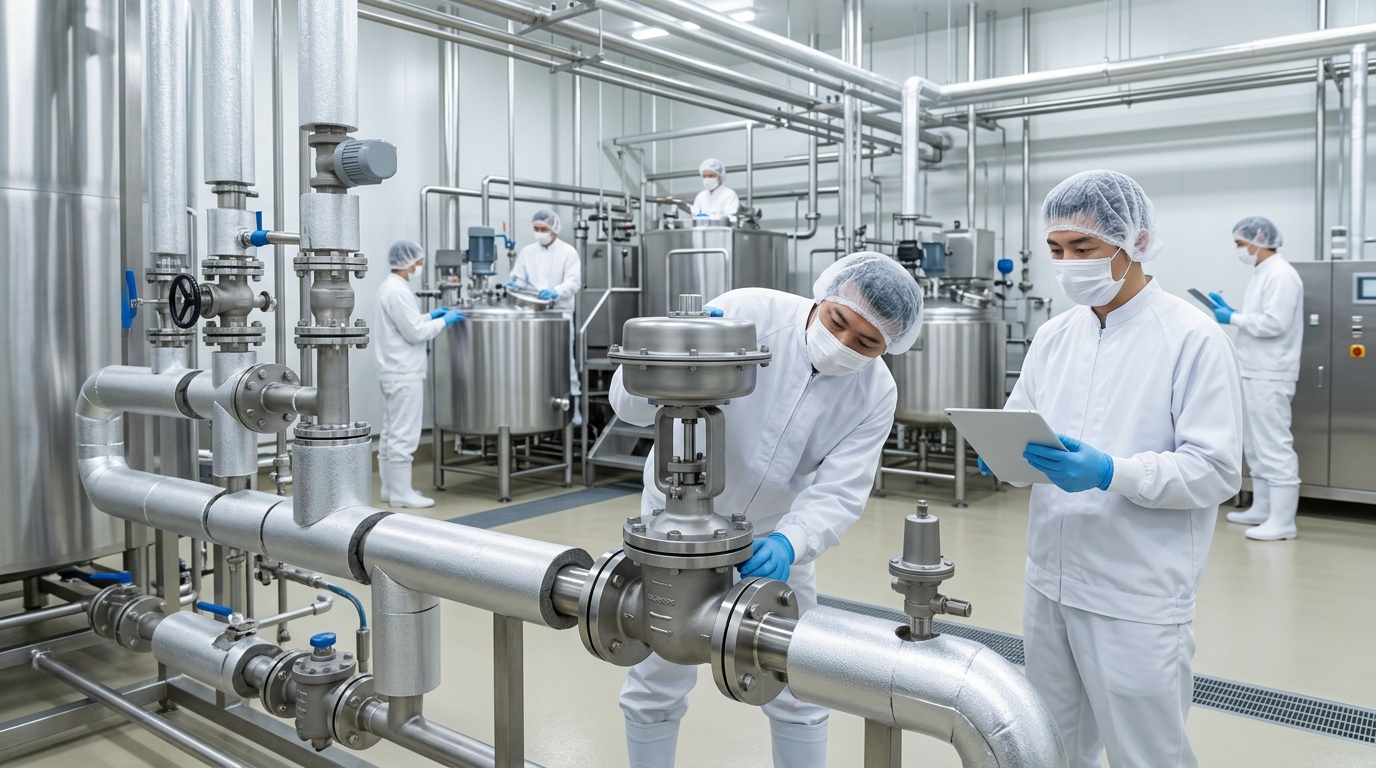
Energy-saving audits at a factory make waste around steam and fuel visible, and their cost-effectiveness lies in being able to start with improvements whose payback can be clearly estimated. The cost of the audit itself varies with its scope and scale, but once you identify the “losses that occur day after day”—such as faulty steam traps, heat radiation from piping, and excessive pressure settings—it is not unusual to find room for fuel-cost savings that exceed the cost of the countermeasures. Grasping the current amount of loss first, and then proceeding from the items with the shortest payback period, is an approach that is less likely to fail.
Key points of this article
- The value of an energy-saving audit lies in “making losses visible” and “prioritizing by payback period”
- In steam systems, faulty traps, excessive pressure, and heat radiation are typical areas for savings
- Because figures change with conditions, it is more reliable to measure your own equipment before deciding
How an energy-saving audit reduces fuel costs
Much of the fuel cost used in a factory is consumed in the process of generating steam or hot water in a boiler and delivering it to each piece of equipment. This process generally includes a certain amount of loss that is hard to see. An energy-saving audit measures or estimates that loss and converts it into a monetary amount, making it possible to judge where to start for the highest cost-effectiveness.
Typical areas for savings
The following are items that tend to come up in steam systems. Because the degree of impact varies with the factory and operating conditions in every case, please treat them as rough guides.
- Faulty steam traps (steam blow-through): if left faulty, that amount of steam keeps being lost unused
- Excessive pressure settings: supplying at a pressure higher than necessary tends to increase heat radiation and the amount of drain
- Insufficient insulation on piping and valves: heat radiation from exposed sections accumulates
- Inadequate drain recovery: heat that could be recovered is being discarded
Many of these are of a nature where “once fixed, the effect continues,” which makes them characteristically easy to estimate a payback period for.
How to think about cost-effectiveness
An easy-to-understand method for judging the investment in an audit is to compare the cost of the countermeasure with the annual fuel-cost savings, and look at it in terms of payback period. For example, items with a small unit cost and continuing savings, such as replacing a faulty trap, tend to have a short payback period. On the other hand, insulation refurbishment and equipment renewal can involve large costs, so they need to be judged carefully based on measured values of their effect. Setting out both “the size of the loss amount” and “the cost of the countermeasure” at the audit stage makes it easier to assign priorities.
Points to note for making the most of an audit
To reliably connect audit results to fuel-cost reduction, it is important to keep the premises of the figures in mind.
Figures assume measurement under your own conditions
Energy-saving-related reduction rates and payback periods are often presented as reference values, but the actual effect varies greatly with steam pressure, operating hours, fuel unit price, and the condition of the equipment. Applying figures from other companies’ cases directly to your own operation risks estimating either too high or too low. In an audit, we recommend calculating losses based as much as possible on measurement of and interviews about your own equipment, and clearly stating the conditions.
Consider maintenance after improvement as well
Faulty traps and insufficient insulation are items that can recur over time even after countermeasures are taken. To sustain the effect, it is effective to combine periodic inspection and record-keeping in an operation that catches signs of deterioration early. By not ending the audit as a one-time event but connecting it to a cycle of improvement → inspection → reevaluation, it becomes easier to maintain cost-effectiveness over the long term.
Frequently asked questions
Q1. How much does an energy-saving audit cost?
A1. It varies with the target scope, equipment scale, and measurement items. We recommend first organizing what you want to audit and estimating with a narrowed-down scope.
Q2. How much will fuel costs be reduced?
A2. Because it changes with steam pressure, operating hours, fuel unit price, and equipment condition, it is in practice hard to give a uniform figure. Estimating based on measurement of your own equipment is the reliable approach.
Q3. How should I think about the payback period?
A3. You obtain a rough figure by dividing the cost of the countermeasure by the annual savings. The smaller the unit cost and the more the effect continues, the shorter the payback period tends to be.
Q4. Where should I start?
A4. It is common to proceed from items with a large loss amount and a small countermeasure cost. Replacing a faulty trap is one example that is easy to get started with.
Q5. Is it enough to perform the audit just once?
A5. The improvement effect can fade over the years. An operation that combines periodic inspection and record-keeping and reevaluates is helpful for maintaining the effect.
Q6. Is there any meaning for a small-scale factory as well?
A6. Because losses can occur regardless of scale, there is value in auditing with a narrowed-down scope. It is a good idea to start by checking the systems with the largest impact.
Summary
The cost-effectiveness of an energy-saving audit lies in making fuel-cost waste visible as a monetary amount and being able to start from improvements with a short payback period. Because figures change with conditions, it is important not to take other companies’ case figures at face value, but to judge on the premise of measurement of your own equipment.
Even at a stage such as “we don’t know which system to audit first,” “we suspect a faulty trap but haven’t been able to estimate the loss amount,” or “we can’t tell whether the pressure setting is excessive,” you are welcome to consult us starting from organizing the current situation. For the selection and review of valves and traps in steam systems, please feel free to contact Yoshitake’s technical consultation desk. We will consider everything together with you, right down to how to assign priorities, while hearing about your equipment conditions.